
11. Customer Segmentation & Behavior Prediction
A. Problems Addressed
• One-size-fits-all marketing sent to every customer alike
• Low personalization across campaigns and offers
• Ad spend wasted on audiences unlikely to convert
• No early warning when valuable customers are about to churn
B. Significance, Risks & Consequences of Neglect
• Generic marketing steadily underperforms and erodes margins
• Missing early churn signals means losing customers you could have kept
• Without prediction, growth stays reactive instead of proactive
C. Our Solution
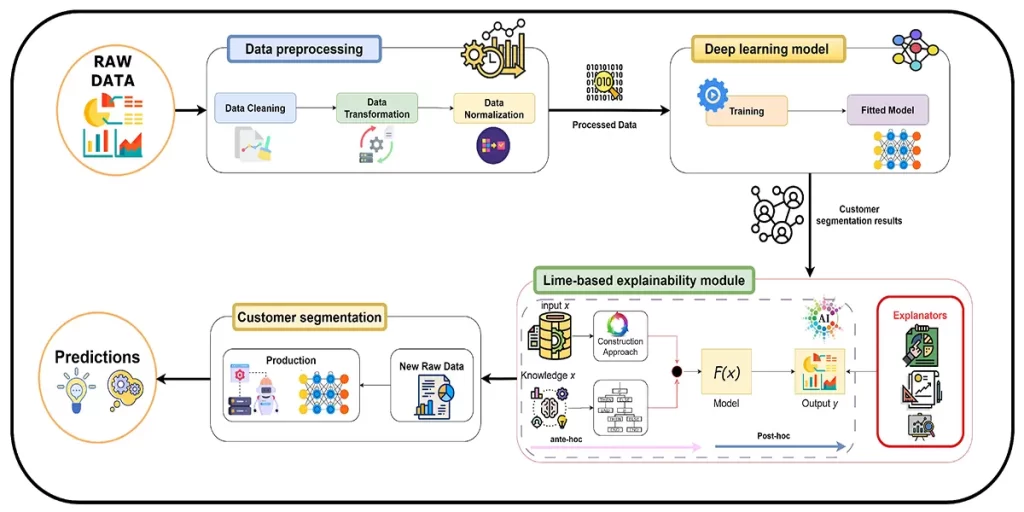
We use AI-driven segmentation and predictive modeling to group customers by behavior and value, and forecast who’s likely to buy, churn, or upgrade — so you can act before they decide.
D. Benefits
• Higher-converting campaigns built on real customer behavior
• Reduced churn through early, targeted intervention
• Smarter allocation of marketing and retention budget
• Improved customer lifetime value across every segment
E. Pain Points Solved
• “We treat every customer exactly the same”
• “We don’t know who’s about to leave until it’s too late”
• “Our targeting feels like guesswork”
• “We can’t predict who’s actually likely to buy again”
F. Tools, Techniques & Process
Tools: Customer Data Platforms (CDPs), ML clustering models, CRM behavior tracking, predictive analytics engines.
Techniques: RFM segmentation, churn-prediction modeling, lookalike audience building.
Process: Data consolidation → Segmentation modeling → Predictive scoring → Targeted campaign activation.
G. Case Studies:
• Case Study 1: A subscription business identified at-risk customers through churn prediction and cut cancellations by 20% with timely offers.
• Case Study 2: A retailer segmented customers by purchase behavior, boosting repeat-purchase revenue through tailored campaigns.